Research Guides

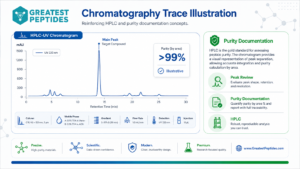
Reading an HPLC Chromatogram: Peptide Purity by Area
How to read an HPLC chromatogram and calculate peptide purity by area percent.


How to read an HPLC chromatogram and calculate peptide purity by area percent.
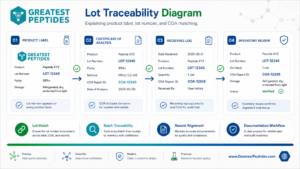
Matching the lot number across product label, COA, receiving log, and inventory for an auditable trail.
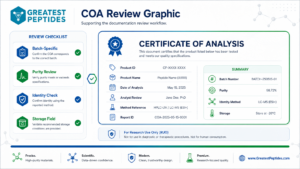
A batch-specific checklist for reviewing a peptide certificate of analysis: purity, identity, method, and storage.
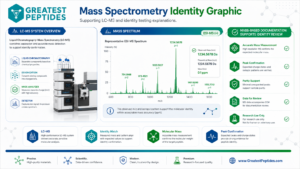
How LC-MS provides an orthogonal, mass-based confirmation of peptide identity within a tight ppm error.
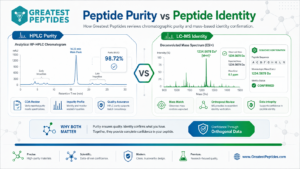
Purity and identity are related but separate analytical attributes. How RUO labs evaluate each, and why both belong on a serious COA review.
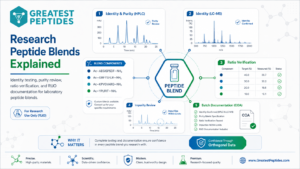
Identity testing, purity review, ratio verification, and COA documentation for laboratory peptide blends.
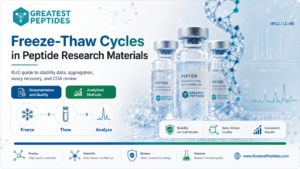
How repeated freeze-thaw cycles affect peptide stability, aggregation, and assay recovery, and how to document it.
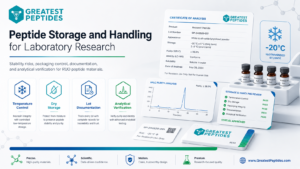
Stability risks, packaging control, documentation, and analytical verification for RUO peptide research materials.
Semax vs. Selank compared: origins, proposed mechanisms, and how the two research peptides are studied side by side.
A research overview of Dihexa, an angiotensin IV analog studied in synaptogenesis and cognition via the HGF/c-Met pathway.